


How Historic Mill Creek Modernized Water Control Without Compromising Its 18th-Century Character
Customized slide gates and modern automation preserve one of Michigan’s oldest working industrial landmarks while improving reliability and operational flexibility.
Historic infrastructure presents a unique engineering challenge: how do you modernize critical water control systems without altering the authentic appearance and operation that make the site historically significant?
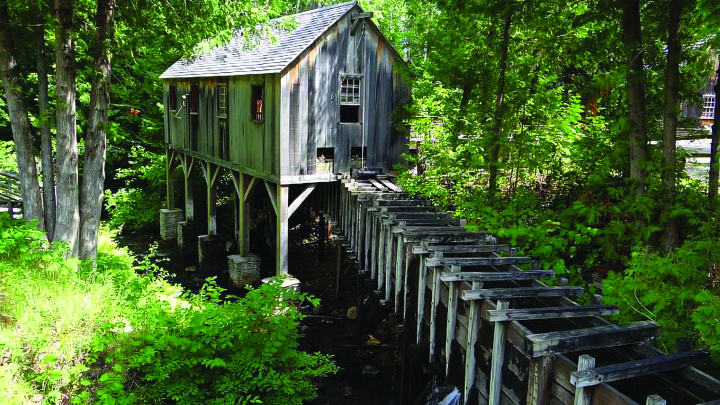
That was the challenge facing Historic Mill Creek, a working reconstruction of one of Michigan’s earliest industrial sites managed by the Michigan Department of Natural Resources (DNR). Originally established in 1790, the sawmill continues to demo
nstrate early American milling technology using water power, attracting thousands of visitors each year.
To preserve the site’s historical authenticity while improving day-to-day operations, Michigan DNR partnered with MacMillan & Associates, Rowe Professional Services, and Kennedy Industries to develop customized water control solutions that blend seamlessly into the historic environment while delivering the reliability, flexibility, and precision expected from modern flow control systems.
The Engineering Challenge
Restoring historic infrastructure requires much more than replacing aging equipment.
Engineers must preserve the visual character and historical operation of the site while ensuring the infrastructure remains safe, reliable, and practical to operate for decades to come.
For Historic Mill Creek, the project required balancing several competing objectives:
- Preserve the authentic appearance of an 18th-century sawmill.
- Maintain historically accurate manual gate operation for educational demonstrations.
- Improve operational flexibility for DNR staff.
- Increase reliability while minimizing maintenance.
- Integrate modern automation without distracting from the visitor experience.
Unlike a conventional water control project, virtually every visible component had to complement the site’s historical architecture.
 The Solution: Traditional Appearance Meets Modern Engineering
Working closely with the project team, Kennedy Industries designed and supplied two customized slide gate systems, each engineered to perform a different function while preserving the site’s historic character.
Manual Slide Gate for Historic Demonstrations
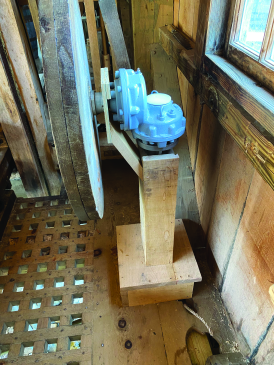
One slide gate was installed within a drop-box structure that directs water through the reconstructed flutter wheel.
To preserve the educational experience, the gate was equipped with a manually operated handwheel enclosed within a custom wood-screened stand that replicates the appearance of the original mill gate used more than two centuries ago.
Visitors can watch the gate operate much as it would have during the early 1800s, providing an authentic demonstration of historical water-powered milling.
Automated Slide Gate for Daily Operations
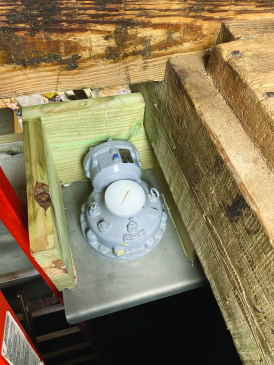
A second slide gate was installed within the primary water channel to provide modern operational flexibility.
This gate incorporates a Limitorque electric actuator paired with a right-angle gearbox, allowing operators to precisely regulate water flow either locally or remotely through the operator control panel.
The automated system enables staff to quickly respond to changing operating conditions without compromising the site’s historic appearance.
Why Slide Gates Were Selected
Slide gates are widely used throughout municipal and industrial water systems because they provide reliable, accurate regulation of water flow with relatively low maintenance requirements.
For Historic Mill Creek, customized slide gates offered several important advantages:
- Precise water flow regulation
- Long service life
- Durable construction for outdoor environments
- Compatibility with both manual and electric actuation
- Ability to customize visible components to match the historic setting
- Reliable operation within existing hydraulic structures
Their flexibility made them an ideal choice for preserving both operational performance and historical authenticity.
Why a Limitorque Electric Actuator?
While preserving history was essential, daily operation also required modern convenience and reliability.
The Limitorque electric actuator provides:
- Precise positioning of the slide gate
- Local and remote operation
- Faster response to changing water conditions
- Reduced manual labor
- Improved operator safety
- Consistent, repeatable flow control
By automating one of the two gates, operators can efficiently manage water levels while allowing the demonstration gate to retain its original manual operation.
Results
The completed project successfully balanced historic preservation with modern engineering.
Key Outcomes
- Preserved the site’s authentic 18th-century appearance
- Improved water flow control and operational reliability
- Integrated historically accurate manual gate operation
- Added remote and local automated control capabilities
- Customized equipment to blend seamlessly into the historic environment
- Reduced operator effort while maintaining educational value
- Protected an important cultural and historical resource for future generations
Lessons Learned
Historic infrastructure projects often require custom-engineered solutions rather than standard equipment.
By combining traditional operating methods with modern flow control technology, owners can preserve the authenticity that visitors expect while improving reliability, safety, maintenance, and operational flexibility.
Historic Mill Creek demonstrates that thoughtful engineering can successfully bridge centuries of technological advancement without sacrificing historical integrity.
Why Historic Water Control Infrastructure Matters
Across North America, historic mills, dams, canals, and water control structures continue to serve educational, recreational, environmental, and cultural purposes.
As these facilities age, many owners face the challenge of upgrading critical infrastructure while preserving the historic character that defines these landmarks.
Customized flow control systems—including slide gates, manual operating mechanisms, and modern electric actuators—allow agencies to improve safety, reliability, and long-term sustainability without fundamentally changing the appearance or visitor experience of these historic sites.
Frequently Asked Questions
How do you modernize historic water control infrastructure without changing its appearance?
Customized engineering allows modern water control equipment to be designed around the historic environment. Components such as slide gates, manual operating mechanisms, and concealed or architecturally compatible actuator systems can improve reliability while preserving historical authenticity.
What is a slide gate?
A slide gate is a flow control device used to regulate water levels and water movement through channels, dams, mills, and water control structures. It provides accurate, dependable flow regulation and is commonly used in municipal, industrial, and environmental applications.
Why are slide gates used for historic restoration projects?
Slide gates can be customized to match existing structures while delivering modern performance, making them well suited for projects where preserving historic appearance is as important as improving reliability.
What is a Limitorque actuator?
A Limitorque actuator is an electric actuator used to automate valves and gates. It provides precise positioning, remote operation, and dependable performance for water and wastewater infrastructure.
Can historic infrastructure incorporate automation?
Yes. Modern automation can often be integrated into historic facilities without altering their visual appearance by carefully designing equipment placement and architectural details.
What should engineers consider when restoring historic water infrastructure?
Successful projects balance historical preservation, operational reliability, maintenance requirements, operator safety, regulatory compliance, and long-term durability.
Partner with Kennedy Industries for Customized Water Control Solutions
Whether preserving a historic landmark, modernizing aging infrastructure, or designing new water control systems, Kennedy Industries provides customized engineering solutions that combine proven reliability with application-specific design.
From slide gates and actuators to complete flow control systems, our team works with consulting engineers, municipalities, parks departments, and industrial facilities to solve complex water control challenges while respecting each project’s unique requirements.
Contact Kennedy Industries to learn how customized flow control solutions can help preserve infrastructure, improve operations, and support long-term performance.